
In the world of digital marketing and search engine optimization, meta tags remain one of the most important elements of on-page SEO. They help search engines understand the content of a webpage and influence how pages appear in search results. Whether you run a personal blog, business website, or eCommerce store, properly optimized meta tags can improve visibility, click-through rates, and user engagement.
One tool that has gained attention among webmasters and SEO enthusiasts is the meta tag generator by alaikas. Designed to simplify the process of creating accurate and SEO-friendly meta tags, this tool helps users generate essential tags without requiring advanced technical knowledge.
This comprehensive guide explores the purpose, benefits, features, and practical applications of the meta tag generator by alaikas. By understanding how it works and why meta tags matter, website owners can make informed decisions that support stronger search engine performance.
Understanding Meta Tags and Their Importance
Meta tags are snippets of code placed within the HTML section of a webpage. Although visitors typically do not see these tags directly, search engines use them to interpret and index content effectively.
Meta tags provide valuable information such as page descriptions, keywords, author details, viewport settings, and social media sharing data. When implemented correctly, they enhance a website’s ability to communicate with search engines and improve online visibility.
Search engines rely on metadata to understand the context and relevance of a webpage. While modern search algorithms consider hundreds of ranking factors, metadata remains a foundational element of SEO.
Another important function of meta tags is influencing click-through rates. The title tag and meta description often appear in search engine results pages (SERPs), giving users a preview of the page content before they click.
Without proper meta tags, websites may struggle to attract organic traffic, even if they contain high-quality content. This is why tools that simplify metadata creation have become increasingly valuable.
What Is Meta Tag Generator by Alaikas?
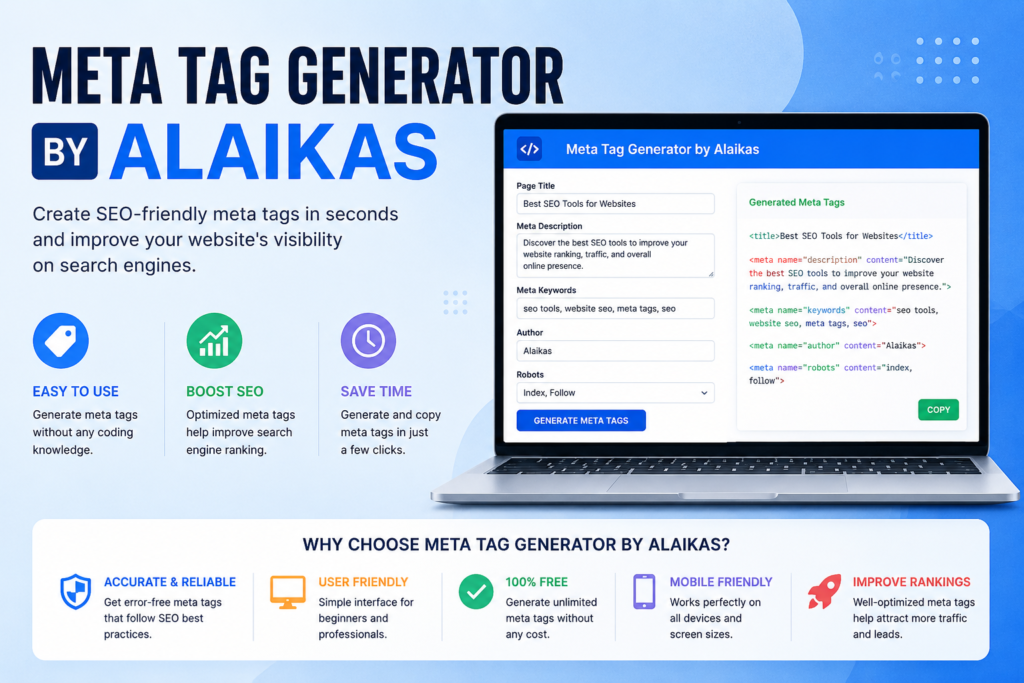
The meta tag generator by alaikas is an online SEO utility designed to help website owners generate accurate and optimized meta tags quickly. Instead of manually writing HTML code, users can enter information into predefined fields and receive ready-to-use code.
The tool is especially useful for beginners who may not be familiar with coding practices or SEO requirements. It eliminates technical complexity while ensuring that essential metadata is generated correctly.
One of the main advantages of the tool is its user-friendly interface. Users simply provide details such as website title, description, keywords, author information, and indexing preferences. The tool then automatically generates the required HTML code.
The generated code can be copied and inserted directly into the head section of a website. This process saves time and reduces the likelihood of formatting errors.
Because search engine optimization continues to evolve, having access to reliable metadata tools can help website owners maintain SEO best practices more efficiently.
Key Features of Meta Tag Generator by Alaikas
Easy Meta Tag Creation
The primary purpose of the tool is to simplify meta tag generation. Users do not need extensive programming knowledge to create professional metadata.
Instead of manually coding every tag, the tool automatically structures the HTML elements. This saves valuable time, particularly for users managing multiple websites.
The generated output follows standard HTML formatting practices. As a result, implementation becomes straightforward and error-free.
Many website owners appreciate this convenience because it reduces the learning curve associated with SEO optimization.
The easier it becomes to implement metadata, the more likely users are to maintain consistent SEO standards across their websites.
SEO-Friendly Structure
Search engines value clear and organized metadata. The tool helps users create properly formatted title tags and meta descriptions.
Well-structured metadata improves search engine understanding of webpage content. This can contribute to better indexing and visibility.
The generated tags align with common SEO recommendations, making them suitable for various website types.
Consistency in metadata implementation also supports long-term optimization efforts.
By following accepted standards, website owners can avoid common mistakes that may impact search performance.
User-Friendly Interface
One of the most appealing aspects of the meta tag generator by alaikas is its simplicity.
Users can enter information into intuitive fields without needing technical expertise.
The interface guides users through the process, ensuring that important metadata elements are not overlooked.
This accessibility makes the tool suitable for bloggers, entrepreneurs, marketers, and developers alike.
A streamlined experience encourages broader adoption of SEO best practices.
Benefits of Using Meta Tag Generator by Alaikas
Saves Time and Effort
Creating metadata manually can be time-consuming, especially when managing numerous web pages.
The tool automates the process and significantly reduces the workload associated with coding.
Users can generate complete metadata within minutes rather than spending time researching syntax and formatting requirements.
This efficiency allows website owners to focus on content creation and marketing strategies.
Time savings become even more valuable as websites expand and require ongoing optimization.
Improves SEO Performance
Properly optimized meta tags support search engine indexing and content understanding.
Search engines use metadata to determine page relevance and display information in search results.
A well-written title and description can improve click-through rates by attracting user attention.
Higher engagement levels may contribute to stronger search visibility over time.
By simplifying metadata creation, the tool encourages consistent SEO implementation across all pages.
Reduces Technical Errors
Manual coding often introduces mistakes such as missing quotation marks, incorrect tag placement, or formatting inconsistencies.
Automated generation minimizes these risks and ensures proper structure.
Accurate metadata improves compatibility with browsers, search engines, and web crawlers.
Error-free implementation contributes to a smoother website experience.
Reducing technical issues can save considerable troubleshooting time in the future.
How to Use Meta Tag Generator by Alaikas
Using the tool is generally a straightforward process that requires only a few steps.
First, access the tool through its website or platform. Most meta tag generators provide a simple form-based interface.
Enter your website title, ensuring that it accurately reflects page content. The title should remain concise and keyword-focused.
Next, write a compelling meta description that summarizes the page while encouraging users to click.
Include relevant keywords where appropriate, but avoid excessive keyword stuffing.
Provide additional details such as author name, language preferences, indexing instructions, and robot directives if available.
After entering the required information, generate the metadata code.
Copy the resulting HTML code and paste it into the head section of your webpage.
Finally, verify implementation using SEO analysis tools or browser inspection features.
Best Practices for Meta Tag Optimization
Write Unique Title Tags
Each webpage should have a unique title that accurately describes its content.
Duplicate titles can create confusion for search engines and users.
Effective titles typically include target keywords while remaining natural and readable.
Clear titles improve both search relevance and user engagement.
Regular audits help ensure that titles remain optimized as content evolves.
Create Compelling Meta Descriptions
Meta descriptions act as advertisements within search results.
Although they may not directly influence rankings, they significantly affect click-through rates.
Descriptions should clearly explain page value while encouraging user action.
Avoid generic text that fails to distinguish your content from competitors.
A persuasive description can increase organic traffic even when rankings remain unchanged.
Use Relevant Keywords Naturally
Keywords remain important for communicating content topics.
However, excessive keyword repetition can harm readability and reduce content quality.
Focus on incorporating keywords naturally within titles, descriptions, and page content.
User intent should guide keyword selection and placement.
Balanced optimization creates a better experience for both users and search engines.
Common Meta Tag Mistakes to Avoid
Many website owners unintentionally make metadata mistakes that limit SEO effectiveness.
One common issue is missing title tags. Without a proper title, search engines may generate their own version, which may not accurately represent the page.
Another mistake involves duplicate metadata across multiple pages. Unique metadata improves indexing accuracy and relevance.
Keyword stuffing is another problem. Overloading tags with repetitive keywords can reduce credibility and potentially trigger search engine penalties.
Some websites use vague descriptions that fail to communicate value. Users are less likely to click on unclear search snippets.
Ignoring mobile optimization can also impact performance. Viewport tags help ensure responsive design across different devices.
Regular SEO audits help identify and correct these issues before they affect search visibility.
Why Website Owners Prefer Automated Meta Tag Tools
Automation has become an essential component of modern digital marketing.
Website owners often manage dozens or even hundreds of pages, making manual metadata creation impractical.
Automated tools simplify repetitive tasks while maintaining consistency.
They also help users who lack coding experience implement professional SEO practices.
The meta tag generator by alaikas offers an efficient solution that balances usability with functionality.
As SEO continues to evolve, automated tools help users stay aligned with current standards and recommendations.
The combination of speed, accuracy, and accessibility explains why many webmasters rely on such tools for metadata management.
The Future of Meta Tag Optimization
Search engines continue to refine their algorithms and content evaluation methods.
While artificial intelligence and semantic search have expanded ranking considerations, metadata remains highly relevant.
Future SEO strategies will likely emphasize context, user intent, and structured information even more.
Meta tags will continue serving as foundational signals that help search engines interpret webpage content.
Tools that simplify metadata creation will remain valuable because they reduce technical barriers and encourage optimization.
Website owners who consistently maintain high-quality metadata will be better positioned to adapt to evolving search engine requirements.
Investing in proper metadata today supports stronger visibility and performance in the future.
Conclusion
Meta tags remain a critical element of effective search engine optimization. They help search engines understand webpage content, improve indexing accuracy, and influence how pages appear in search results.
The meta tag generator by alaikas provides a practical and user-friendly solution for creating optimized metadata without requiring advanced coding knowledge. By automating the generation process, the tool saves time, reduces errors, and supports consistent SEO implementation.
Whether you are a beginner building your first website or an experienced webmaster managing multiple projects, leveraging reliable metadata tools can enhance your optimization efforts. With proper titles, descriptions, and supporting tags, websites can improve visibility, attract more visitors, and strengthen their overall online presence.
FAQs
1. What is the meta tag generator by alaikas?
The meta tag generator by alaikas is an online tool that helps users create SEO-friendly meta tags quickly and accurately without manual coding.
2. Why are meta tags important for SEO?
Meta tags help search engines understand webpage content and influence how pages appear in search engine results, improving visibility and click-through rates.
3. Is coding knowledge required to use the tool?
No. The tool is designed for beginners and professionals alike, allowing users to generate metadata through a simple form-based interface.
4. Can meta tags improve search rankings?
While meta tags alone do not guarantee higher rankings, they contribute to better indexing, relevance, and user engagement, which support SEO efforts.
5. What meta tags can be generated?
Most generators create title tags, meta descriptions, keyword tags, robot tags, author tags, viewport tags, and other essential metadata elements.
6. How often should meta tags be updated?
Meta tags should be reviewed whenever significant content changes occur and during regular SEO audits to ensure continued relevance.
7. Is the meta tag generator by alaikas suitable for all websites?
Yes. Blogs, business websites, portfolios, educational sites, and eCommerce stores can all benefit from properly optimized metadata generated through the tool.