
Introduction
In today’s fast-paced digital world, businesses are constantly searching for ways to improve efficiency, reduce costs, and increase productivity. One of the most effective solutions is Robotic Process Automation (RPA), a technology that automates repetitive and rule-based tasks. As organizations strive to stay competitive, automation has become a key part of business growth and operational success.
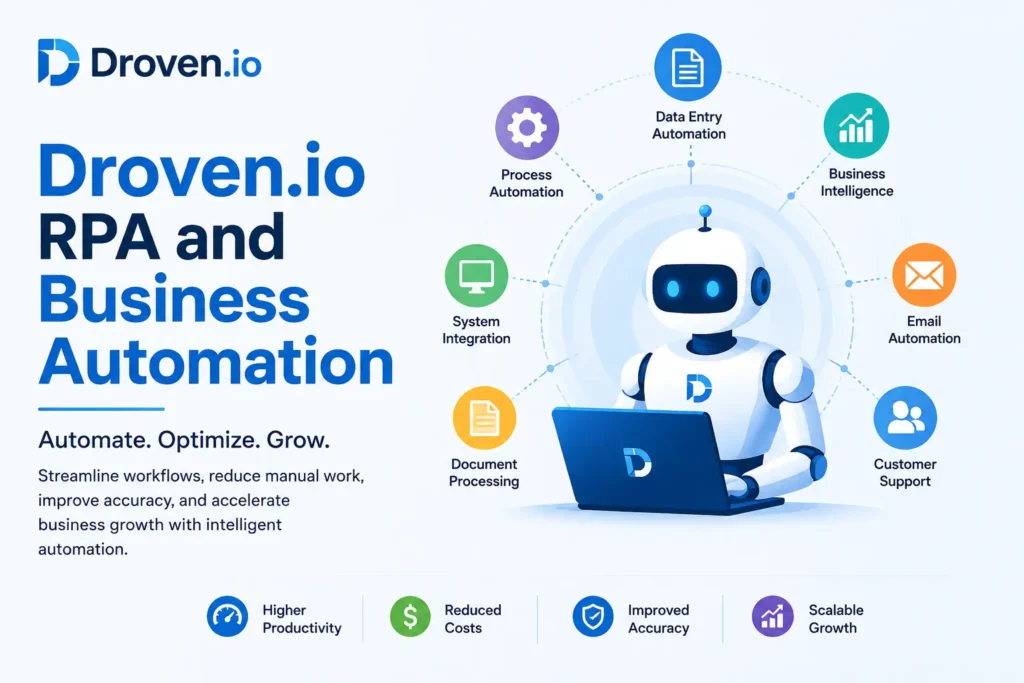
The concept of droven.io rpa and business automation is gaining attention among companies looking to streamline workflows and eliminate manual processes. By leveraging advanced automation technologies, businesses can improve accuracy, enhance customer experiences, and allow employees to focus on more strategic tasks.
Automation is no longer limited to large corporations. Small and medium-sized businesses are also adopting intelligent solutions to optimize daily operations. Whether it is handling invoices, processing customer requests, managing data, or generating reports, automation can significantly improve performance across departments.
This article explores the role of RPA and business automation, how platforms like Droven.io contribute to digital transformation, the benefits of automation, implementation strategies, challenges, and future trends. By the end, you will have a complete understanding of why automation is becoming a critical component of modern business success.
Understanding RPA and Business Automation
What Is Robotic Process Automation?
Robotic Process Automation, commonly known as RPA, is a technology that uses software robots or digital workers to perform repetitive tasks. These bots mimic human actions such as data entry, form processing, file management, and system navigation.
Unlike traditional software solutions, RPA does not require major changes to existing systems. It works by interacting with applications just as a human employee would. This makes implementation faster and more cost-effective.
Businesses across industries use RPA to automate routine operations. Financial institutions automate invoice processing, healthcare organizations manage patient records, and retail companies streamline inventory updates. The versatility of RPA makes it suitable for almost every industry.
The growing interest in droven.io rpa and business automation reflects the increasing demand for practical automation solutions that help businesses save time and resources while maintaining operational excellence.
Difference Between RPA and Business Automation
Although RPA and business automation are closely related, they are not identical. RPA focuses on automating specific repetitive tasks, while business automation involves optimizing entire workflows and processes.
Business automation often combines RPA with technologies such as artificial intelligence, machine learning, workflow management systems, and analytics. Together, these tools create a comprehensive automation ecosystem.
For example, an RPA bot may extract data from invoices, while a business automation platform manages approvals, sends notifications, and updates accounting systems automatically.
This combination enables organizations to achieve greater efficiency and create seamless operational processes from start to finish.
Why Businesses Need Automation Today
Increasing Operational Efficiency
One of the biggest reasons organizations invest in automation is efficiency. Employees often spend hours completing repetitive administrative tasks that add little strategic value.
Automation allows businesses to complete these tasks within minutes. Software bots can work continuously without breaks, ensuring faster processing and improved productivity.
As a result, organizations can handle larger workloads without increasing staffing costs. This creates a more scalable business environment capable of supporting growth.
Companies implementing droven.io rpa and business automation often aim to reduce manual effort and accelerate routine operations, leading to better overall performance.
Reducing Human Errors
Manual data entry and repetitive tasks are prone to errors. Even highly skilled employees can make mistakes when processing large volumes of information.
Automation significantly reduces these risks by following predefined rules with consistent accuracy. Bots perform tasks exactly as programmed, ensuring reliable outcomes every time.
Reduced errors lead to improved compliance, better customer satisfaction, and lower operational risks. This is particularly important in industries such as finance, healthcare, and legal services where accuracy is critical.
By minimizing human mistakes, businesses can maintain higher quality standards and strengthen customer trust.
Key Benefits of Droven.io RPA and Business Automation
Cost Savings and Resource Optimization
One of the most attractive benefits of automation is cost reduction. Organizations can automate repetitive processes that would otherwise require significant human resources.
By reallocating employees to higher-value activities, companies improve workforce productivity without increasing operational expenses.
Automation also reduces costs associated with errors, delays, and inefficiencies. Over time, these savings contribute to a stronger return on investment.
Businesses exploring droven.io rpa and business automation often find that automation creates measurable financial benefits while supporting long-term growth strategies.
Enhanced Customer Experience
Customer expectations continue to rise in every industry. Clients expect faster responses, personalized services, and seamless interactions.
Automation helps businesses meet these expectations by accelerating response times and improving service quality. Automated systems can process requests instantly, provide updates, and handle routine inquiries efficiently.
For example, automated customer support workflows can resolve common issues without requiring human intervention, leading to quicker resolutions.
A positive customer experience strengthens brand loyalty and encourages repeat business, making automation an important competitive advantage.
Improved Compliance and Security
Many industries must comply with strict regulations regarding data management and operational processes.
Automation supports compliance by creating consistent workflows, maintaining detailed audit trails, and reducing the risk of unauthorized actions.
Every automated activity can be recorded and monitored, making it easier for organizations to demonstrate compliance during audits.
Additionally, automated systems can enforce security policies, helping businesses protect sensitive information and reduce cybersecurity risks.
Common Applications of Business Automation
Finance and Accounting Automation
Finance departments handle large volumes of repetitive transactions and documentation. Automation can simplify many accounting processes, including invoice processing, expense management, and financial reporting.
Software bots can extract information from invoices, validate data, and update accounting systems automatically.
This reduces processing time while improving accuracy and compliance. Finance teams can focus on financial analysis and strategic planning rather than administrative work.
As organizations adopt droven.io rpa and business automation, financial operations often become one of the first areas targeted for automation improvements.
Human Resources Automation
Human resources departments manage numerous repetitive tasks such as employee onboarding, payroll processing, attendance tracking, and benefits administration.
Automation streamlines these activities by reducing paperwork and manual data entry.
For example, new employee information can automatically populate multiple systems, reducing onboarding time and improving employee experiences.
HR professionals can then dedicate more time to talent development, employee engagement, and organizational growth initiatives.
Customer Service Automation
Customer service teams frequently manage repetitive inquiries and requests. Automation can help handle these interactions more efficiently.
Chatbots, automated ticket routing, and self-service portals enable customers to find solutions quickly.
These tools reduce response times while allowing support agents to focus on complex issues that require human expertise.
Improved efficiency leads to better customer satisfaction and more effective support operations.
Implementing Automation Successfully
Identifying the Right Processes
Successful automation begins with selecting appropriate processes. Not every task should be automated immediately.
Organizations should identify repetitive, rule-based activities that consume significant time and resources. These processes typically offer the highest automation value.
Examples include data entry, invoice processing, report generation, and customer onboarding.
Careful process evaluation ensures that automation initiatives deliver meaningful results and maximize return on investment.
Building an Automation Strategy
A clear strategy is essential for long-term success. Businesses should define goals, establish performance metrics, and prioritize automation opportunities.
Leadership support is also important. Executive sponsorship helps secure resources and encourages organization-wide adoption.
Companies should create a roadmap that outlines implementation phases, expected outcomes, and continuous improvement plans.
A structured approach reduces risks and increases the likelihood of successful automation deployment.
Training Employees for Change
Automation is most effective when employees understand its purpose and benefits.
Organizations should provide training programs that help staff work alongside automated systems. Employees need to learn how to monitor, manage, and optimize automated processes.
Open communication reduces resistance and encourages acceptance of new technologies.
When employees see automation as a tool that enhances their work rather than replaces them, adoption becomes much smoother.
Challenges in Business Automation
Integration with Existing Systems
Many businesses use multiple software platforms that have evolved over time. Integrating automation solutions with these systems can be challenging.
Organizations must ensure compatibility between automation tools and existing applications.
Proper planning and testing help minimize disruptions and ensure smooth implementation.
Working with experienced automation professionals can simplify integration efforts and reduce technical complications.
Managing Organizational Change
Introducing automation often requires cultural and operational changes.
Employees may have concerns about job security or changing responsibilities. Addressing these concerns through transparent communication is essential.
Leaders should emphasize how automation supports employees by eliminating repetitive work and creating opportunities for skill development.
A positive change management strategy encourages collaboration and successful adoption.
Future Trends in Automation
Artificial Intelligence and Intelligent Automation
The future of automation extends beyond simple task automation. Artificial intelligence is making automation systems smarter and more capable.
AI-powered solutions can analyze data, make predictions, recognize patterns, and support decision-making processes.
This combination of AI and automation is often called intelligent automation. It enables businesses to automate increasingly complex tasks while improving outcomes.
As technology evolves, intelligent automation will become a major driver of innovation and competitiveness.
Hyperautomation and Digital Transformation
Hyperautomation refers to automating as many business processes as possible using multiple technologies.
Organizations are combining RPA, AI, analytics, workflow management, and cloud computing to create highly efficient digital ecosystems.
Businesses adopting droven.io rpa and business automation can position themselves for future success by embracing comprehensive automation strategies.
Hyperautomation supports digital transformation efforts and helps organizations adapt to rapidly changing market conditions.
Frequently Asked Questions
What is Droven.io RPA and business automation?
Droven.io RPA and business automation refers to the use of robotic process automation and intelligent workflow technologies to streamline business operations, improve efficiency, and reduce manual work.
How does RPA help businesses save money?
RPA reduces labor costs, minimizes errors, accelerates task completion, and improves productivity, resulting in significant operational savings over time.
Which industries benefit most from automation?
Industries such as finance, healthcare, retail, manufacturing, logistics, and customer service benefit greatly from automation because they handle large volumes of repetitive processes.
Is business automation suitable for small businesses?
Yes. Small businesses can use automation to improve efficiency, reduce administrative workloads, and compete more effectively without significantly increasing operational costs.
Does automation replace employees?
Automation typically handles repetitive tasks, allowing employees to focus on strategic, creative, and customer-focused responsibilities. In many cases, it enhances rather than replaces human work.
What is the future of business automation?
The future includes intelligent automation, AI integration, hyperautomation, predictive analytics, and increasingly sophisticated digital workflows that improve business performance and innovation.
Conclusion
Business automation has become an essential strategy for organizations seeking greater efficiency, accuracy, and scalability. Robotic Process Automation simplifies repetitive tasks, while broader automation initiatives transform entire workflows and operational processes.
The growing interest in droven.io rpa and business automation demonstrates how businesses are embracing technology to reduce costs, improve customer experiences, strengthen compliance, and support digital transformation. From finance and human resources to customer service and operations, automation delivers measurable benefits across every department.
As artificial intelligence and intelligent automation continue to evolve, businesses that invest in automation today will be better prepared for future challenges and opportunities. By developing a clear strategy, selecting the right processes, and supporting employees through change, organizations can unlock the full potential of automation and achieve sustainable long-term success.